What does a wool duvet do with your sweat, hour by hour through the night?
Updated .
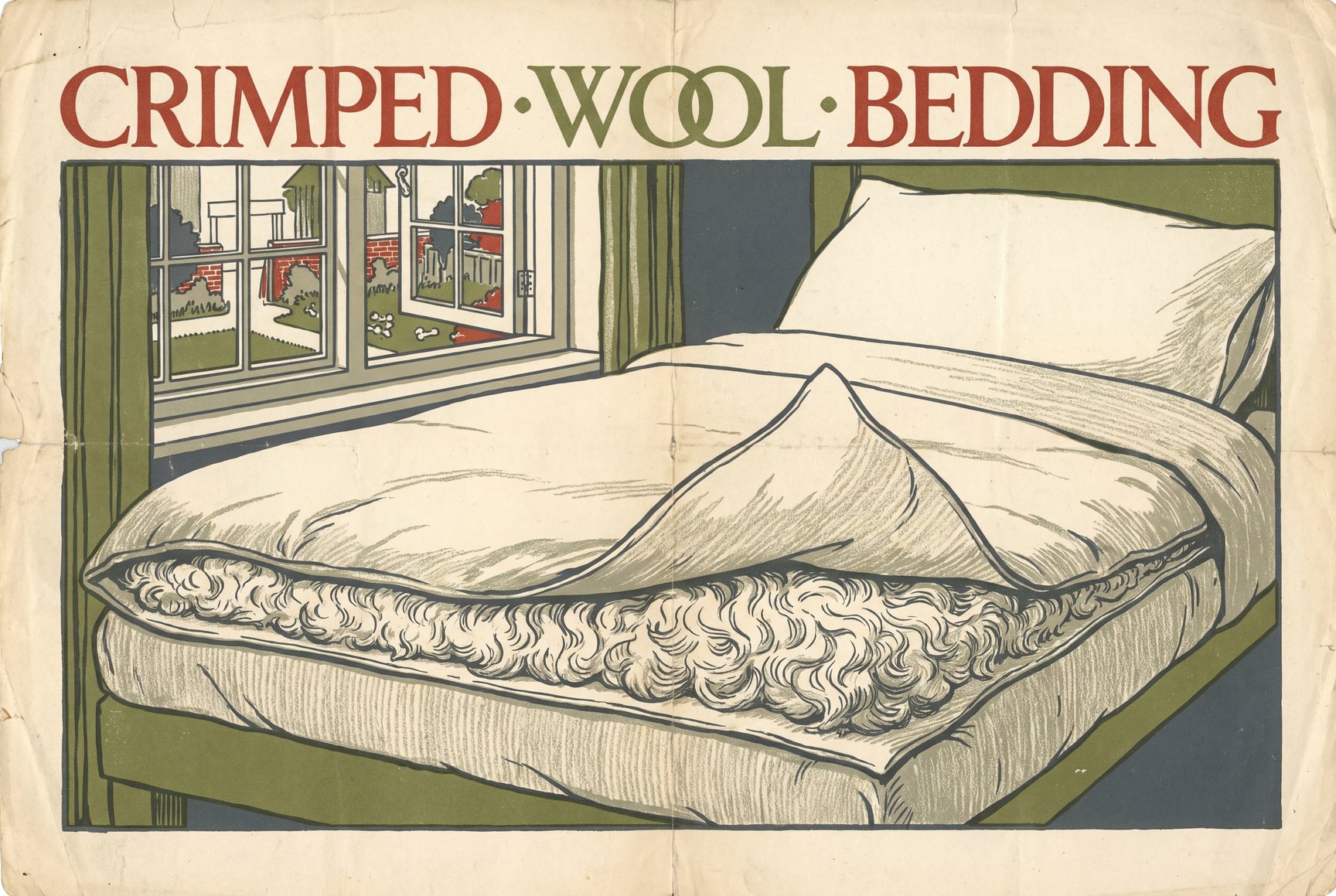
Your skin and lungs lose about 800 mL of water a day without any visible sweat, a little under a quart (Brandis, LibreTexts). At night, the skin's half of that goes into your bedding. What a wool duvet does with that water depends on the hour, because the body sheds most of its heat early in the night and cools toward morning.
Short answer: A wool fill works as a humidity buffer, not a sponge. In the first hours of sleep, when the body sheds the most heat, its fibers take sweat vapor inside. The heat your skin spent making that vapor leaves with it, so you stay cooler. Toward morning, as less vapor arrives, the fill passes some back to the room. Wool can hold about 35% of its dry weight (Chow et al.), and normal sleep goes with a bed climate of 40 to 60% relative humidity (Okamoto-Mizuno et al.).
This guide is for: people who sleep under a wool duvet or comforter, or are thinking of buying one, and want to know what it does with moisture between bedtime and morning.
Key Takeaways
Three findings carry most of this guide: how much water you lose, how much wool can hold, and how little sellers say about either one.
- Your skin alone loses about 400 mL of water a day, a little under a pint, without visible sweat. At night that vapor passes into the air under the covers and then into the fill (Brandis, LibreTexts).
- Wool takes up about 35% of its dry weight in water vapor in saturated air. Cotton takes about 24% and polyester less than 1%, according to the University of Sydney group behind two wool sleep trials (Chow et al.).
- Of 10 US seller pages we read, 1 gave a moisture figure. Seven claimed wicking with no number, and none described what their comforter does at different points in the night.
On This Page
The first five sections follow the night in order; the last four compare fills, check seller claims, test the research and cover airing.
Each section opens with a one-sentence summary. Every figure links to the page it came from, so any number can be checked in one click. The sources are peer-reviewed sleep trials, a physiology text, bed climate research from Japan, trade body releases and seller product pages.
How much moisture does your body release into the bed overnight?
Even without sweating, skin and breath lose water all night, and much of the skin's share passes straight into your bedding as vapor.
Physiologists call this insensible water loss: water that leaves your skin and airways without visible beads of sweat. A standard fluid physiology text puts the skin's share at about half of an adult's daily insensible loss, with the airways accounting for the rest (Brandis, LibreTexts). The same text notes that you cannot stop the loss from your skin.
Breath and skin send their water to different places. Your breath goes into the room. The skin's share goes into the pocket of air under the covers, and from there into whatever fills the duvet above. Any real sweating comes on top of this, and it rises in a warm room or under a duvet too heavy for the season.
Sweat that evaporates on your skin takes heat with it. Evaporation is how the body cools itself, and it only keeps working while the air next to the skin can take more vapor. Once the pocket under the covers turns muggy, evaporation slows and the heat stays in the body. You feel that as stickiness. Japanese sleep researchers put it simply: humid heat adds to the thermal load on a sleeper (Okamoto-Mizuno and Mizuno, PMC). Everything a fill does with moisture matters for that reason. The goal is a cooler body, and moving vapor away is how a fill gets there.
How does a wool fill take up that moisture?
Wool pulls sweat vapor inside each fiber, and the heat your skin spent making that vapor leaves with it, so you sleep cooler.
Wool is hygroscopic: its fibers pull water vapor into their own protein structure instead of holding it on the surface. The Sydney team ranks wool highest of the common textile fibers for moisture uptake, with cotton in the middle and polyester lowest (Chow et al.).
When water molecules bind inside a fiber they give off a little heat. Researchers call it heat of sorption, and it is highest in wool, then cotton, then polyester (Shin et al.).
Fibers that give off heat sound like the opposite of cooling. The order of events matters. Your skin spends heat turning sweat into vapor, and that heat leaves the skin with the vapor. The wool then takes the vapor in, which keeps the air next to the body open to the next round of evaporation. The heat leaves with the damp, and the small warming from sorption happens out in the fill rather than on the skin.
Fill weight sets how much vapor a duvet can take in over a night. A heavier fill simply holds more. Even so, the part lying over the body does most of the work, and a real bed never reaches the saturated air of a lab test.
What happens in the first hour after you get into bed?
In the first hour your skin warms the covers, vapor starts to rise, and a wool fill begins soaking it up while giving off a little heat.
When you lie down, the fill has sat at your bedroom's humidity all day. It already holds some water, but well below its limit. As your skin warms the air under the covers, the humidity there climbs above the room's. The fibers closest to you absorb first. The Sydney researchers describe the exchange as running in either direction, set by the temperature and humidity differences between fiber, air and skin (Shin et al.).
Falling asleep is the other job of the first hour, and it depends on shedding heat. Core temperature starts to fall before sleep, while blood vessels near the skin widen to let heat out (heat and sleep review, PMC). A clammy layer against your skin fights that.
The most cited evidence here comes from pajamas, not duvets. In a trial in a hot bedroom, in the mid-eighties Fahrenheit, older adults fell asleep in 12.4 minutes in wool, less than half the time they took in cotton and faster than in polyester (Chow et al.). Two of that paper's authors were from Australian Wool Innovation, which owns The Woolmark Company, so weigh that. A cooler trial also found that young adults fell asleep faster in wool sleepwear (Shin et al.). Whether a wool duvet does the same at bedtime is a separate question, and the research section below explains why it is still open.
What does wool do during the deep sleep of the early night?
The early night brings the most deep sleep and the most sweating, so this is when a fill's ability to slow rising humidity matters most.
You get most of your deep sleep in the first part of the night. Sleep physiologists have long reported that sweat glands run harder in deep sleep than in dreaming sleep, so the warm, damp stretch tends to come early. For the fill, the early night is the busiest time.
Researchers in Japan who study bed climate give a target. During normal sleep, the air at the waist under the covers stays in the low nineties Fahrenheit, at 40 to 60% relative humidity. Humidity above 70% is linked to disturbed sleep in hot conditions (Okamoto-Mizuno et al.).
A hygroscopic fill earns its keep in this stretch. Each gram of vapor the fibers take in is a gram that is not raising the humidity against your skin, so sweat can keep evaporating and carrying heat away. The result is a slower rise in humidity and a cooler sleeper, not a dry bed. An earlier comparison of wool-filled and polyester-filled duvets found lower heart rate, and lower temperature and humidity under the covers, with wool during sleep. The Sydney group summarizes that study in its review of past work (Shin et al.). The same review cites a blanket study in warm, humid conditions that found less sweating under wool than under an acrylic and cotton blend.
What changes in the hours before you wake up?
Toward morning you sweat less and dream more, and the wool can hand some of its stored vapor back out through the shell to the room.
The later part of the night holds more dreaming sleep, and sweating drops off in that stretch. Less new vapor arrives, but humidity still matters. Japanese researchers who study heat and sleep found that humid heat raises the load on a sleeper's body. In one of their experiments, humid heat applied only in the later part of the night still increased wakefulness (Okamoto-Mizuno and Mizuno, PMC).
As the body's output falls, the exchange can reverse. Fibers near the outer shell sit next to room air that is often drier than the pocket around the body, so they pass vapor outward. By the time you get up, the fill usually holds more water than it did at bedtime. Morning airing removes that leftover moisture.
The table below is our reading of the sources in this guide, laid out against the clock. It is a judgement, not a measurement, and no maker page we read publishes anything like it.
| Stretch of the night | Your body | The wool fill | Evidence (our judgement) |
|---|---|---|---|
| Lights out to the first hour | Shedding heat to fall asleep | Absorbing vapor near the skin | Moderate for fibers; weak for duvets |
| Early night | Deepest sleep, most sweating | Taking up most of the night's vapor | Moderate |
| Middle of the night | Lighter cycles, steady output | Moving vapor toward the shell | Weak; inferred from fiber behavior |
| Last hours before waking | More dreaming, less sweat | Passing vapor back to the room | Weak to moderate |
| After you get up | Out of bed | Holding leftover vapor until aired | Moderate |
How does wool compare with down and polyester fill on moisture?
Wool holds far more vapor than polyester and moved it faster in one lab comparison, though that test was commissioned by a wool trade body.
At the level of the fiber, the gap with polyester is wide. The Sydney group puts wool at the top of the common fibers for moisture uptake and polyester at the bottom (Chow et al.). We did not find a primary source with a comparable figure for down, so we leave it blank rather than guess.
The main recent test of whole duvets comes from the BioComposites Centre at Bangor University in Wales. It compared full-size single duvets of similar warmth, filled with wool, polyester, feather and down, and pure down (British Wool). British Wool commissioned the work with the International Wool Textile Organisation, and the Welsh Government funded it, so treat it as industry-backed. We found the results in trade releases rather than in a peer-reviewed journal.
| Measure (Bangor tests) | Wool against polyester | Wool against feather and down | Source |
|---|---|---|---|
| Speed of moisture transmission | Up to 120% faster | 153% faster | British Wool |
| Insulation | 25% better | 30% better | IWTO |
A lab rig is not you. The figures show how the fills behave under controlled conditions, not how anyone will sleep. Our guide on whether a wool or down comforter is better for your bed covers the other trade-offs, including warmth, weight and care.
What do wool comforter product pages say about moisture?
Most seller pages we read claim that wool wicks moisture, only one gives a figure, and none describe what happens across a single night.
We read 10 US product pages for wool comforters on September 27, 2026, and sorted each one by what it says about moisture. The result is a count of published statements, not a product test. The pages came up in general searches and include makers and retailers, so they are a sample rather than a full survey.
The pages fell into three buckets:
- Gives a figure for moisture uptake: 1 of 10. The figure is a share of its weight that wool can absorb without feeling damp.
- Claims wicking or moisture control with no figure: 7 of 10. Most use the word "wicking" and leave it there.
- No explicit moisture claim in the description: 2 of 10. These talk about temperature and breathability instead.
None of the pages gave a test result for the comforter being sold, and none said when in the night the moisture handling happens. A moisture claim on its own describes wool in general, not the item you are looking at.
| Page read | Moisture statement | Bucket |
|---|---|---|
| Sonoma Wool Company | Up to 30% of its weight without feeling damp | Figure |
| Turmerry | Wicks away moisture | Claim only |
| Woolino | Moisture wicking | Claim only |
| Frankenmuth Woolen Mill | Wicks moisture | Claim only |
| Stumptown | Moisture-wicking | Claim only |
| The Company Store | Breathable and moisture-wicking | Claim only |
| 45th Street Bedding | Wicks moisture away from the body | Claim only |
| Holy Lamb Organics, all-season | Wicks away moisture | Claim only |
| Holy Lamb Organics, certified organic | Temperature regulation only | No claim |
| Pillows.com, Holy Lamb listing | Breathability and temperature | No claim |
What does the research not prove about wool at night?
The strongest sleep studies tested wool pajamas, not wool duvets, and the one that also tested wool bedding found no clear effect from it.
The best-known wool sleep trials tested pajamas. The earlier Sydney study compared wool and polyester bedding as well as sleepwear, and no effect of bedding type on sleep was observed, as the same group noted in its follow-up paper (Chow et al.). The earlier authors also list among their limitations that they did not record temperature and humidity between skin and fabric (Shin et al.). The mechanism in this guide rests on solid fiber science, but no study has yet shown that a wool duvet in particular improves sleep.
A systematic review in the Journal of Sleep Research found only nine eligible studies comparing fibers in sleepwear or bedding. It concluded that comparing fiber types systematically is difficult because the studies vary so much (Li et al.). The review also found that goose down duvets increased deep sleep in young adults in cool conditions, a reminder that wool is not the only fill with a result in its favor.
Funding is the other caution. Much of the wool evidence involves the wool industry, from the Australian Wool Innovation co-authors to the British Wool commission at Bangor. Industry money does not prove bias. Still, you should know who asked the question. Construction matters too, because the shell fabric sits between you and the fill. Our guide on how a wool duvet is built, layer by layer explains each part.
How do you let a wool duvet dry out between nights?
Airing the duvet each morning lets the fill release the night's vapor back to the room, so it starts the next night with space to absorb.
The fill ends the night holding more water than it started with. The simplest habit is to fold the duvet back on getting up and leave the bed open for a while before making it. Folding it back exposes the inner face to room air and lets the stored vapor move out, the same two-way exchange that ran all night. One US maker's product page recommends regular sunning between washes to freshen the fibers (Frankenmuth Woolen Mill).
Warmth matters as well. A duvet that is too warm for the season makes you sweat more, which puts more water into the fill and pushes the bed toward the humid end of its range. If you are unsure how warm yours is, our guide on converting a wool duvet's GSM to tog shows how to compare weights across sellers.
Think about the layers between you and the wool, too. A breathable cotton duvet cover lets vapor through, while a plastic-backed protector stops it before it reaches the fill. Wool can only buffer vapor that reaches it. Airing is what dries a wool duvet out, and washing is a separate care question with its own rules.
Common questions
Short answers to common questions about wool, sweat and humidity in bed, each one drawn from the sources cited earlier in this guide.
Does a wool duvet get wet from night sweats?
Mostly it takes sweat in as vapor inside the fibers, so it rarely feels wet. Wool can hold a large share of its dry weight as vapor (Chow et al.). If heavy sweats soak your sheets, you still need to air it.
How much water can wool hold before it feels damp?
The Sydney sleep researchers put wool's uptake at about 35% of its dry weight in saturated air (Chow et al.). One seller page says 30% without feeling damp (Sonoma Wool Company). A bed never reaches saturation.
Is wool better than down if you sweat at night?
The industry-commissioned Bangor tests reported faster moisture transmission for wool than for feather and down. A systematic review found a deep-sleep benefit for down in cool rooms, so the answer depends partly on the bedroom.
Does humidity late in the night affect sleep?
Yes. Japanese laboratory work found that humid heat in the later part of the night still increased wakefulness (Okamoto-Mizuno and Mizuno, PMC). Sweating falls toward morning, but a muggy bed can still wake a sleeper.
Should you air a wool duvet every morning?
Airing is the simplest way to let the fill give up the night's vapor. Fold the duvet back for a while before making the bed. Washing is not needed to dry it out.
Do wool pajamas matter more than a wool duvet?
The trials that measured sleep benefits used wool sleepwear, and the one that also varied bedding saw no effect from the bedding. If you change only one thing, the evidence is stronger for what touches your skin.
Sources
Outside reading behind this wool duvet page, each entry marked with where on the page it is used.
- Brandis, LibreTexts (med.libretexts.org), used under “Key Takeaways”; “How much moisture does your body release into the bed overnight?”.
- Chow et al. (dovepress.com), used under “Key Takeaways”; “How does a wool fill take up that moisture?”; “What happens in the first hour after you get into bed?”; “How does wool compare with down and polyester fill on moisture?”; “What does the research not prove about wool at night?”; “Common questions”.
- Okamoto-Mizuno et al. (pmc.ncbi.nlm.nih.gov), used under “What does wool do during the deep sleep of the early night?”.
- Okamoto-Mizuno and Mizuno, PMC (pmc.ncbi.nlm.nih.gov), used under “How much moisture does your body release into the bed overnight?”; “What changes in the hours before you wake up?”; “Common questions”.
- Shin et al. (dovepress.com), used under “How does a wool fill take up that moisture?”; “What happens in the first hour after you get into bed?”; “What does wool do during the deep sleep of the early night?”; “What does the research not prove about wool at night?”.
- heat and sleep review, PMC (pmc.ncbi.nlm.nih.gov), used under “What happens in the first hour after you get into bed?”.
- British Wool (shop.britishwool.org.uk), used under “How does wool compare with down and polyester fill on moisture?”.
- IWTO (iwto.org), used under “How does wool compare with down and polyester fill on moisture?”.
- Sonoma Wool Company (sonomawoolcompany.com), used under “What do wool comforter product pages say about moisture?”; “Common questions”.
- Turmerry (turmerry.com), used under “What do wool comforter product pages say about moisture?”.
- Woolino (woolino.com), used under “What do wool comforter product pages say about moisture?”.
- Frankenmuth Woolen Mill (wool-bedding.com), used under “What do wool comforter product pages say about moisture?”; “How do you let a wool duvet dry out between nights?”.
- Stumptown (stumptownmattress.com), used under “What do wool comforter product pages say about moisture?”.
- The Company Store (thecompanystore.com), used under “What do wool comforter product pages say about moisture?”.
- 45th Street Bedding (45thstreetbedding.com), used under “What do wool comforter product pages say about moisture?”.
- Holy Lamb Organics, all-season (holylamborganics.com), used under “What do wool comforter product pages say about moisture?”.
- Holy Lamb Organics, certified organic (holylamborganics.com), used under “What do wool comforter product pages say about moisture?”.
- Pillows.com, Holy Lamb listing (pillows.com), used under “What do wool comforter product pages say about moisture?”.
- Li et al. (ncbi.nlm.nih.gov), used under “What does the research not prove about wool at night?”.