Why can't most wool duvets go in a washing machine, and what should you do instead?
Updated .
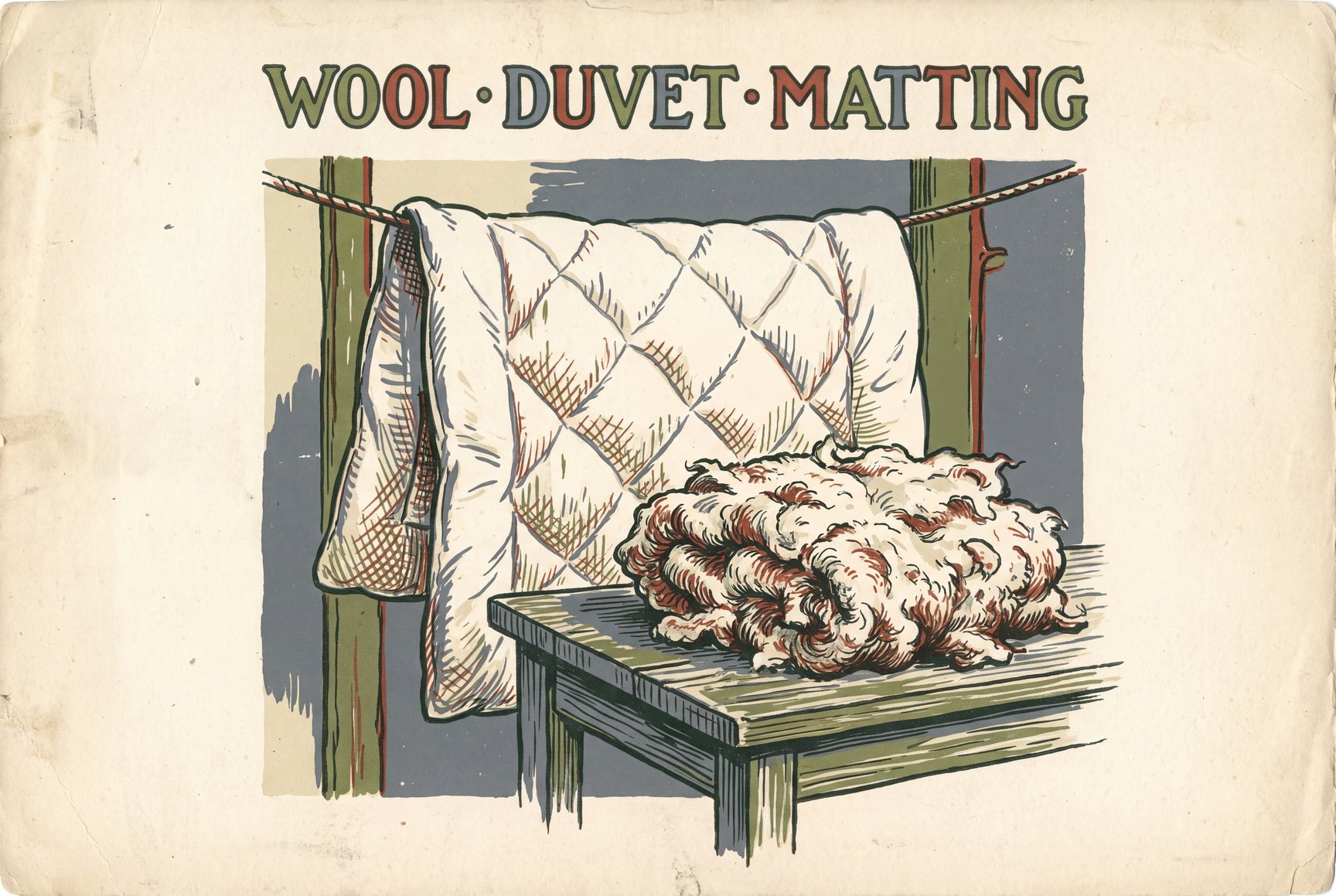
Wool fibers are covered in tiny scales that all point the same way. A washing machine supplies the water, warmth and tumbling that lock those scales together for good. In a duvet, that means the fill shrinks, hardens and bunches up inside a shell that stays the same size. We read 10 sellers' care pages. Six of them either forbid the machine or allow it only with the wash cycle switched off.
Short answer: Untreated wool felts when warm water and agitation push its scaled fibers together, and felting cannot be undone. That is why 3 of the 10 wool comforter pages we read say spot clean only, and 3 more allow a machine only for soaking and spinning. Air the duvet, spot clean stains and keep it in a washable cover. Only machine wash it if the maker says the fill is washable, shrink-resist-treated wool.
This guide is for: people who own an untreated wool duvet or comforter, or are about to buy one, and want to keep it clean without ruining the fill.
Key Takeaways
- We read 10 sellers' care pages for wool comforters. Three say spot clean only and 3 allow a machine only with the wash action removed.
- About 75% of machine-washable wool gets that way through a chlorine and resin treatment at the mill (European Commission LIFE). A detergent at home cannot do the same job.
- Where a label allows water at all, the rules are cold water and no agitation. One maker's soak-and-spin method calls for a machine with 50-pound capacity or more (My Organic Sleep).
On This Page
Why does wool shrink in a washing machine?
Wool fibers are covered in scales that lift in warm water and lock together when tumbled. That locking is felting, and it cannot be reversed.
Each wool fiber is wrapped in overlapping scales that all point the same way. Woolmark explains that heat and moisture make those scales lift. Agitation then locks them onto the scales of other fibers in a ratchet-like mechanism. The change is irreversible and leaves the fibers tangled, the fabric denser and the item smaller (Woolmark). A research review of shrink-resist methods also names the surface scales as the cause of felting shrinkage (review in PMC).
A washing machine delivers all three triggers in one cycle. Water soaks the fill, the drum lifts and drops it, and warm settings add heat. The scales let a fiber slide one way and catch the other, so every tumble moves the fibers a little closer together. The batting gets denser, the duvet gets smaller, and the air pockets that keep you warm get squeezed out.
Cold water helps, but it is not a cure. One seller of untreated wool comforters tells owners not to use the wash cycle at all, because it agitates and can ruin the comforter (Holy Lamb Organics). Agitation is the part you cannot turn down far enough on most machines. You cannot stretch felted wool back, because the fibers are knotted into each other, not just folded.
What makes a duvet riskier to wash than a wool sweater?
A duvet holds pounds of loose batting, not spun yarn, so felting shows up as hard lumps and bare patches that no reshaping will fix.
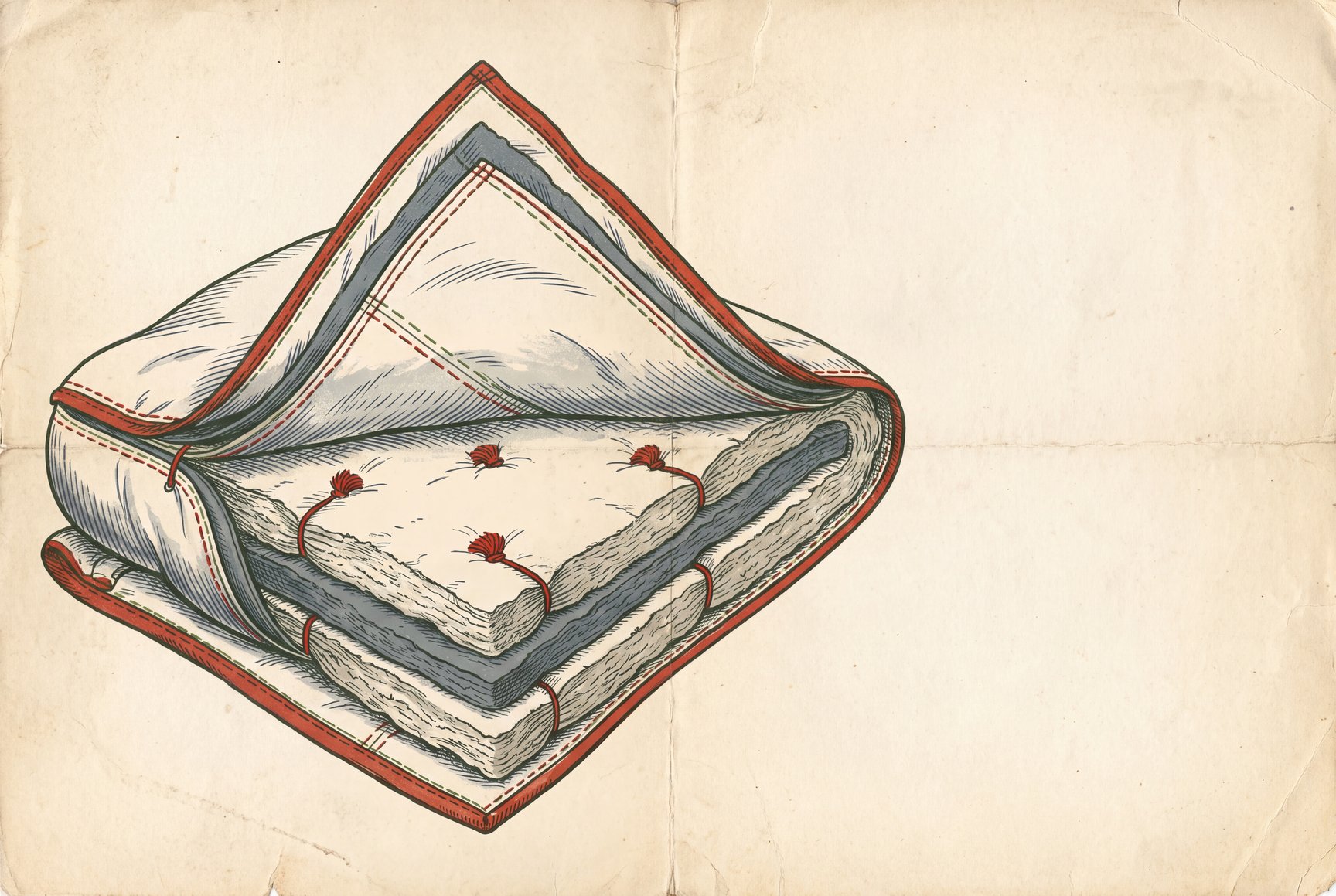
A sweater is knitted from spun yarn, which already holds its fibers in a twisted, orderly structure. A duvet is mostly loose batting: sheets of carded wool held inside a cotton shell by tufts or quilting lines. Holy Lamb Organics, for example, hand-tufts its comforters and stitches around the edge so the batting stays in place (Holy Lamb Organics). Batting like that does not shrink evenly when it felts. It pulls toward the stitches and leaves thin patches between them, while the cotton shell stays its original size.
The sheer amount of wool adds to the risk. Frankenmuth Woolen Mill lists its wool comforter with 3 pounds of wool for a twin, 4 for a queen and 5 for a king (Frankenmuth Woolen Mill). Soaked through, that much wool gets heavy and slow to rinse. It also folds over on itself as the drum turns, which means more friction in more places than any sweater would see.
Drying is the second place things go wrong. Holy Lamb tells owners not to wring or machine dry. Woolino also tells owners not to tumble dry its wool comforter (Woolino). When a sweater shrinks, you lose one garment. When a duvet felts, you lose the warmest layer on your bed, and it is far more expensive to replace.
How many wool duvet makers say not to machine wash?
We read 10 seller care pages. Three say spot clean only, three allow a machine for soaking and spinning only, and four allow a gentle cycle.
We read 10 sellers' product and care pages for sheep's-wool comforters and duvets on September 27, 2026. We sorted each one by what it tells you to do with a washing machine. This is a count of what the pages say, not a trial of any product. We left out alpaca and bison fills, and the set is not a random sample of the market.
| What the page allows | Pages | Which pages |
|---|---|---|
| No machine: spot clean, air, or professional cleaning | 3 | Naturepedic; Magnolia Organics; YOUR MOON |
| Machine only with the wash action removed | 3 | Holy Lamb Organics; Woolino; My Organic Sleep |
| Gentle or wool cycle allowed | 4 | Nest Bedding comforter, retailer listing; Coyuchi; Devon Duvets; Down Under Bedding |
The first group is plain. Naturepedic calls its wool comforter spot clean only, and so does Magnolia Organics. The YOUR MOON listing sends deep cleaning to a professional shop that has experience with wool bedding. The middle group tells you the most. Woolino says to machine wash cold on a wool or delicate cycle, then says not to spin or agitate. My Organic Sleep states that most wool comforters are not washable. The third group is where the fill changes. A retailer listing for Nest Bedding's comforter describes the fill as washable wool and the comforter as designed for gentle machine washing.
What does machine washable wool change about the fiber?
Washable wool has its scales smoothed or coated at the mill, most often by chlorine and resin, so fibers slide past each other instead of locking.
Washable wool is made that way at the mill, long before it goes into a duvet. Woolmark says machine-washable treatments work in one of three ways: removing or smoothing the scales, reducing friction between fibers, or both. "Superwash" is the industry term for wool treated like this (Woolmark). A European Commission LIFE project summary says approximately 75% of machine-washable wool is treated with the chlorine-Hercosett process (European Commission LIFE). That process etches the scales with chlorine and then coats the fiber in resin.
The treatment has costs. The research review calls chlorine-Hercosett the most effective process but harmful to the environment (review in PMC). Newer plasma and ozone treatments try to do the same job without chlorine. Washable wool can also still shrink a little. A wool trade primer notes that Woolmark's TM-31 machine-wash standard still allows up to 5% shrinkage in length and width (The Wool Channel).
The practical point for you is that washability cannot be added at home. A wool detergent, a cold setting or a mesh bag does not smooth the scales on an untreated fill. If your duvet's page does not say the wool was treated or sold as washable, assume it was not. Our guide to the washable wool comforter explains how to check those claims before you buy one.
Can an organic wool duvet be made machine washable?
Rarely. The common chlorine treatment is barred under the organic textile standard, so most certified organic wool duvets stay spot clean only.
Farm & Fiber Knits, a knitting publication, says a product made with chlorine-Hercosett wool cannot carry organic certification under the Global Organic Textile Standard, however the sheep were raised (Farm & Fiber Knits). That fits what the usual process involves, because chlorine is used to strip the scales. For most organic wool duvets, "organic" and "machine washable" pull in opposite directions. Naturepedic's insert is filled with organic wool and is spot clean only (Naturepedic).
There is a narrow exception. The same source says wool shrink-proofed with the Naturetexx Plasma process, which uses only air and electricity, can still go into a product certified organic under that standard. It adds that processes like this are used mostly by outdoor clothing brands so far. None of the organic duvets in our count mentioned a process like that, so it is safer to think of it as a clothing option than something you will find in bedding.
If you are choosing between the two, decide which matters more to you. An untreated organic fill means airing and spot cleaning for the life of the duvet. A treated washable fill lets you use the machine, but the wool went through a chemical process at the mill. Our page on what makes an organic wool comforter organic covers the certification side in more depth.
What do the care words on a wool duvet mean?
Spot clean only means no immersion at all. Soak and spin means water without the wash cycle. Machine washable should name a treated fill.
Care wording on bedding is less standardized than you might expect. The federal Care Labeling Rule applies to manufacturers and importers of textile wearing apparel and certain piece goods (eCFR, 16 CFR Part 423), so it was written with clothing in mind. For a product that washing and dry cleaning would both harm, the rule's own example wording says the item cannot be successfully cleaned. On a duvet, the wording usually reflects the maker's own judgment. That is why it varies so much from one page to the next.
| Phrase you see | What it allows | What it rules out | Our reading |
|---|---|---|---|
| Spot clean only | Blotting a small area | Soaking, any machine | No water on the whole fill, ever |
| Soak and spin only | Immersion, then a spin | The agitating wash stage | Only for a machine you can control step by step |
| Machine wash cold, do not agitate | A soak on a gentle setting | Normal cycles | Treat it as soak and spin, since most cycles agitate |
| Machine washable wool | A gentle or wool cycle | Hot water, high heat | Believable only when the fill is named as treated |
| Dry cleanable | Professional solvent cleaning | Nothing by itself | Makers disagree, so follow your label |
Dry cleaning is where makers disagree most. Woolino calls its comforter dry cleanable, but Devon Duvets tells owners not to dry clean. When two sources conflict, the label on your own duvet wins, because it is the only instruction written for that exact fill.
How do you clean a wool duvet without a washing machine?
Air it outside, blot spills with cool water and a wool detergent, and let a washable cover take the everyday dirt so the fill rarely needs water.
Your simplest protection is a washable duvet cover, because it catches the skin oils and spills that would otherwise reach the wool. Naturepedic recommends a cover for everyday protection and an occasional spell in direct sunlight to restore freshness. Beyond that, most care is airing. Hang the duvet outside for a few hours on a dry day, then give it a good shake before it goes back on the bed.
For stains, treat just the spot and keep water away from the rest of the fill. Holy Lamb suggests soaking the stained area with hydrogen peroxide and warns that it may lighten the fabric. Blot instead of rubbing, because rubbing a wet patch is agitation on a small scale. Then let the area dry flat and completely before you put the cover back on.
| Method | What it handles | Risk to the fill | When to use it |
|---|---|---|---|
| Airing outside | Odor, stale moisture | Very low | At each change of season |
| Washable cover | Everyday oils and dirt | None | All the time |
| Blotting a spot | Small spills | Low if blotted, higher if rubbed | As soon as a spill happens |
| Hand soak in a tub, pressed not wrung | Grime through the whole fill | Moderate | Rarely, and only if the label allows water |
| Professional wool cleaning | Large stains | Depends on the cleaner | When your label or maker points you there |
When is it safe to put a wool duvet in the machine?
Only when the maker's care page says so, the fill is sold as washable wool, and your machine is large enough to hold the duvet without cramming.
Start with the maker, not the fiber. A machine is reasonable only when the maker's page names a washable fill and gives a cycle. Coyuchi, for example, sells its comforter as wool combined with the convenience of machine washability (Coyuchi). If your page says soak and spin instead, use the machine only to soak and spin. That means stopping it before any wash stage runs.
Size is the next limit. My Organic Sleep recommends a large machine, preferably with 50-pound capacity or more, set manually to soak and a medium or high-speed spin (My Organic Sleep). A queen or king duvet in a small drum folds tightly on itself, and that concentrates friction. If you are not sure which size you own, our king and queen size guide lists typical dimensions. A large front-loader at a laundromat is often the only practical choice.
Then keep heat out of every step. Use cold water, choose the gentlest cycle your label allows, and skip warm rinses. Down Under Bedding advises a gentle wool cycle in cold water with wool detergent, followed by drying flat in the air (Down Under Bedding). Turn the duvet as it dries so the center dries as well as the edges. Never put an untreated wool duvet in a hot dryer to finish the job.
What should you do if a wool duvet has already felted?
Felted wool will not return to its old size or softness. Dry it fully, redistribute what you can by hand, and judge if it still keeps you warm.
First, accept what cannot change. Woolmark describes felting as irreversible (Woolmark), so no product will unshrink the fill. What you can do is prevent further damage and decide whether the duvet still does its job for you.
Dry it thoroughly before anything else. Wet wool inside a cotton shell dries slowly in the middle, and a damp core is how bedding starts to smell musty. Lay it flat somewhere warm and airy, and turn it over several times while it dries.
Once it is dry, feel for the damage. Some compaction from use is normal. Holy Lamb tells owners to expect some natural felting in the early months of consistent use (Holy Lamb Organics care). Hard lumps that have slid toward the seams are a different problem. If the fill has bunched into ridges with bare shell between them, you will feel cold through those gaps. You can sometimes work a lump apart by hand through the shell, but it will never go back to even batting.
If the duvet still keeps you warm, you can keep using it as a lighter layer. If it does not, check the seller's terms before you contact them. Holy Lamb states that it cannot guarantee bedding integrity once machine washed, and other makers may have similar terms.
Common questions
Can I wash a wool duvet on a cold delicate cycle?
Only if the label allows it. Most delicate cycles still agitate, and agitation felts untreated wool even in cold water. If your label says soak and spin, skip the wash stage entirely and use just those two settings.
Can I dry clean a wool duvet?
Sometimes. Makers disagree: some call their comforters dry cleanable, while others tell owners never to dry clean. Follow the label on your own duvet, and pick a cleaner who has handled wool bedding before.
How often does a wool duvet need cleaning?
With a washable cover, rarely. Airing it outside a few times a year and spot cleaning spills covers most of what you need. Save a full soak for when the label allows it and the duvet is visibly dirty.
Will a wool detergent stop the fill from felting?
No. A gentle wool detergent protects the fiber from harsh chemicals, but it does nothing to the scales that cause felting. Only a treatment applied at the mill makes wool machine washable.
Can I put a wool duvet in the dryer to freshen it?
Not unless your label allows it. Pages for washable fills sometimes allow a low tumble, while pages for untreated wool forbid machine drying entirely. Sunlight and fresh air will freshen your wool duvet without that risk.
Does washable on a wool duvet mean I can wash it like sheets?
No. Even washable wool pages ask for cold water and a gentle cycle, and the Woolmark machine-wash standard still allows some shrinkage. Treat a washable wool duvet more gently than cotton bedding, and keep heat out of drying unless your label says otherwise.
Sources
Outside reading behind this wool duvet page, each entry marked with where on the page it is used.
- European Commission LIFE (webgate.ec.europa.eu), used under “Key Takeaways”; “What does machine washable wool change about the fiber?”.
- My Organic Sleep (myorganicsleep.com), used under “Key Takeaways”; “How many wool duvet makers say not to machine wash?”; “When is it safe to put a wool duvet in the machine?”.
- Woolmark (woolmark.com), used under “Why does wool shrink in a washing machine?”; “What does machine washable wool change about the fiber?”; “What should you do if a wool duvet has already felted?”.
- review in PMC (pmc.ncbi.nlm.nih.gov), used under “Why does wool shrink in a washing machine?”; “What does machine washable wool change about the fiber?”.
- Holy Lamb Organics (holylamborganics.com), used under “Why does wool shrink in a washing machine?”; “What makes a duvet riskier to wash than a wool sweater?”; “How many wool duvet makers say not to machine wash?”.
- Frankenmuth Woolen Mill (wool-bedding.com), used under “What makes a duvet riskier to wash than a wool sweater?”.
- Woolino (woolino.com), used under “What makes a duvet riskier to wash than a wool sweater?”; “How many wool duvet makers say not to machine wash?”.
- Naturepedic (naturepedic.com), used under “How many wool duvet makers say not to machine wash?”; “Can an organic wool duvet be made machine washable?”.
- Magnolia Organics (magnoliaorganics.com), used under “How many wool duvet makers say not to machine wash?”.
- YOUR MOON (amazon.com), used under “How many wool duvet makers say not to machine wash?”.
- Nest Bedding comforter, retailer listing (eczemacompany.com), used under “How many wool duvet makers say not to machine wash?”.
- Coyuchi (coyuchi.com), used under “How many wool duvet makers say not to machine wash?”; “When is it safe to put a wool duvet in the machine?”.
- Devon Duvets (devonduvets.com), used under “How many wool duvet makers say not to machine wash?”.
- Down Under Bedding (downunderbedding.com), used under “How many wool duvet makers say not to machine wash?”; “When is it safe to put a wool duvet in the machine?”.
- The Wool Channel (thewoolchannel.com), used under “What does machine washable wool change about the fiber?”.
- Farm & Fiber Knits (farmfiberknits.com), used under “Can an organic wool duvet be made machine washable?”.
- eCFR, 16 CFR Part 423 (ecfr.gov), used under “What do the care words on a wool duvet mean?”.
- Holy Lamb Organics care (holylamborganics.com), used under “What should you do if a wool duvet has already felted?”.